
Tech / THE BUYING BRIEF
Headphones for your version of quiet.
The commute, calls and the feel of the earcups matter as much as the noise-cancelling headline.
 Jonathan LowryPublished October 3, 2026 · 3 min read · sources accessed October 3, 2026
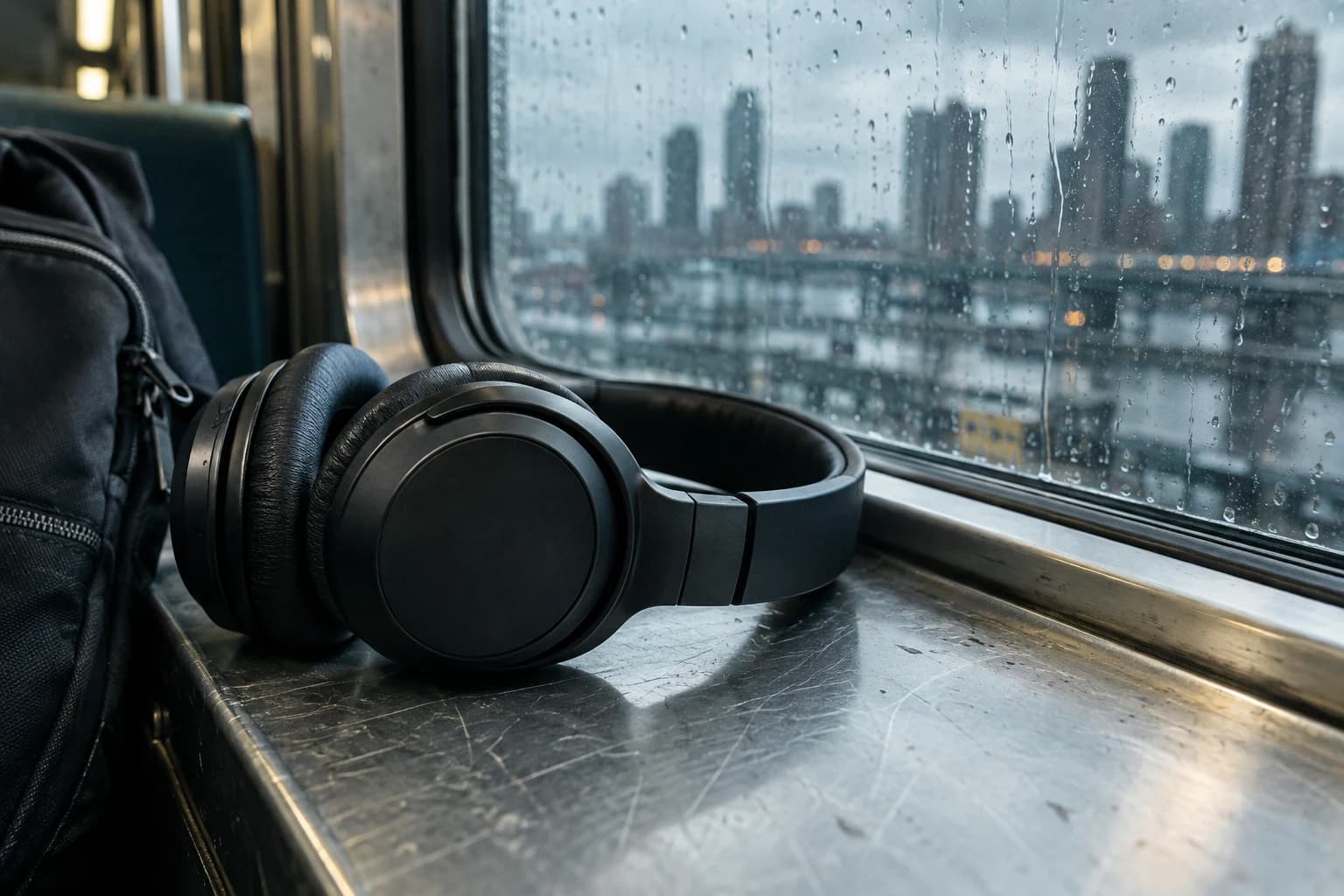
The best headphones for a train journey may not be the pair you want during a day of video calls. Your shopping brief should name the places you listen, the devices you connect and how long you wear them. That gives the specifications a job to do instead of letting a feature list dictate the purchase.
We use manufacturer and standards-body explanations to frame the comparison. We have not measured cancellation, microphones or battery life for a ranked shortlist. Treat this as a way to choose the kind of headphones to investigate and the evidence to request for an exact model.
01
Separate cancellation from fit
Bose explains that active noise cancellation and passive isolation work together. The electronics and the physical fit are different parts of the listening experience. That distinction is useful when comparing designs, but it does not tell you which untested model will sound or feel best to you.
Write down the sound you are hoping to manage and when you still want to hear your surroundings. Compare the specific model's controls, available listening modes and fit. Noise-cancelling headphones are not a substitute for equipment required for a hazardous workplace, and this guide does not make hearing-protection claims.
02
Map the devices before the codecs
A phone, work laptop and games console can have different connection requirements. Check the supported connection for each rather than assuming wireless means universally compatible. If you switch often, investigate how the exact model handles switching and whether simultaneous connections support your intended use.
Bluetooth SIG's LE Audio FAQs explain that using the technology requires compatible equipment. A newer-sounding label by itself does not prove that your existing phone and headphones share every feature. Verify the device combination and software requirements in both manufacturers' documentation before assigning value to a headline capability.
03
Calls deserve their own comparison
Listening quality and microphone performance are separate questions. If work calls are central, look for model-specific information about the microphone and the connection mode used during calls. An impressive music specification is not evidence that people will hear you clearly in the environment where you work.
For a desk-based routine, consider controls you can operate without searching an app, the position of the microphone and the way charging fits your day. For commuting, consider the folded footprint and case. Our judgment is to prioritize the task you repeat most often rather than score every possible feature equally.
04
Compare the whole wearing experience
Check weight, earcup dimensions, headband adjustment and replaceable parts where those are documented. Comfort remains personal, so return terms are valuable when you cannot try the pair in person. A photo cannot establish how a seal will feel with your glasses or whether the headband suits your preferences.
Read the battery claim's conditions, charging requirements and any restrictions on wired use. Do not assume an included cable carries audio or that wireless headphones work with no charge. Confirm the exact color and accessory package at checkout, especially when a sale listing resembles a different version.
THE SHORTLIST STARTS HERE
Three directions to compare
Start with the approach that fits your needs, then compare the details that matter to you.
Commute companion
Compare portability, controls and the model's cancellation evidence for your route.
The trade-off: A compact case and personal fit may matter more than another app feature.
Work-call pair
Prioritize microphone evidence and compatibility with the work device.
The trade-off: Good music playback does not establish good call performance.
Home listening pair
Choose around your listening position, connection and wearing preferences.
The trade-off: An elaborate wireless feature set may not match a fixed listening setup.
SAVE YOURSELF THE SURPRISE
Before checkout
- Main listening location identified.
- Every device's connection checked.
- Call requirements compared separately.
- Battery-claim conditions understood.
- Included cables and case confirmed.
- Fit and return terms considered.
MAKE IT PERSONAL
Bring your brief to the concierge.
Start with this, then add the details that matter to you:
“Help me choose headphones for my routine and devices.”
Find my options ↗Sources
- How do noise cancelling headphones work?
Bose · manufacturer · Accessed October 3, 2026
Explains active cancellation and passive isolation; not independent testing of any headphones.
- Bluetooth LE Audio FAQs
Bluetooth SIG · professional · Accessed October 3, 2026
Technology compatibility background, not confirmation that an individual device supports a feature.
ANOTHER GOOD QUESTION