

Kitchen / THE BUYING BRIEF
Cookware for the meals you repeat.
Start with your stove, pan sizes and cleanup habits, not the biggest matching set.
 Jonathan LowryPublished October 3, 2026 · 4 min read · sources accessed October 3, 2026
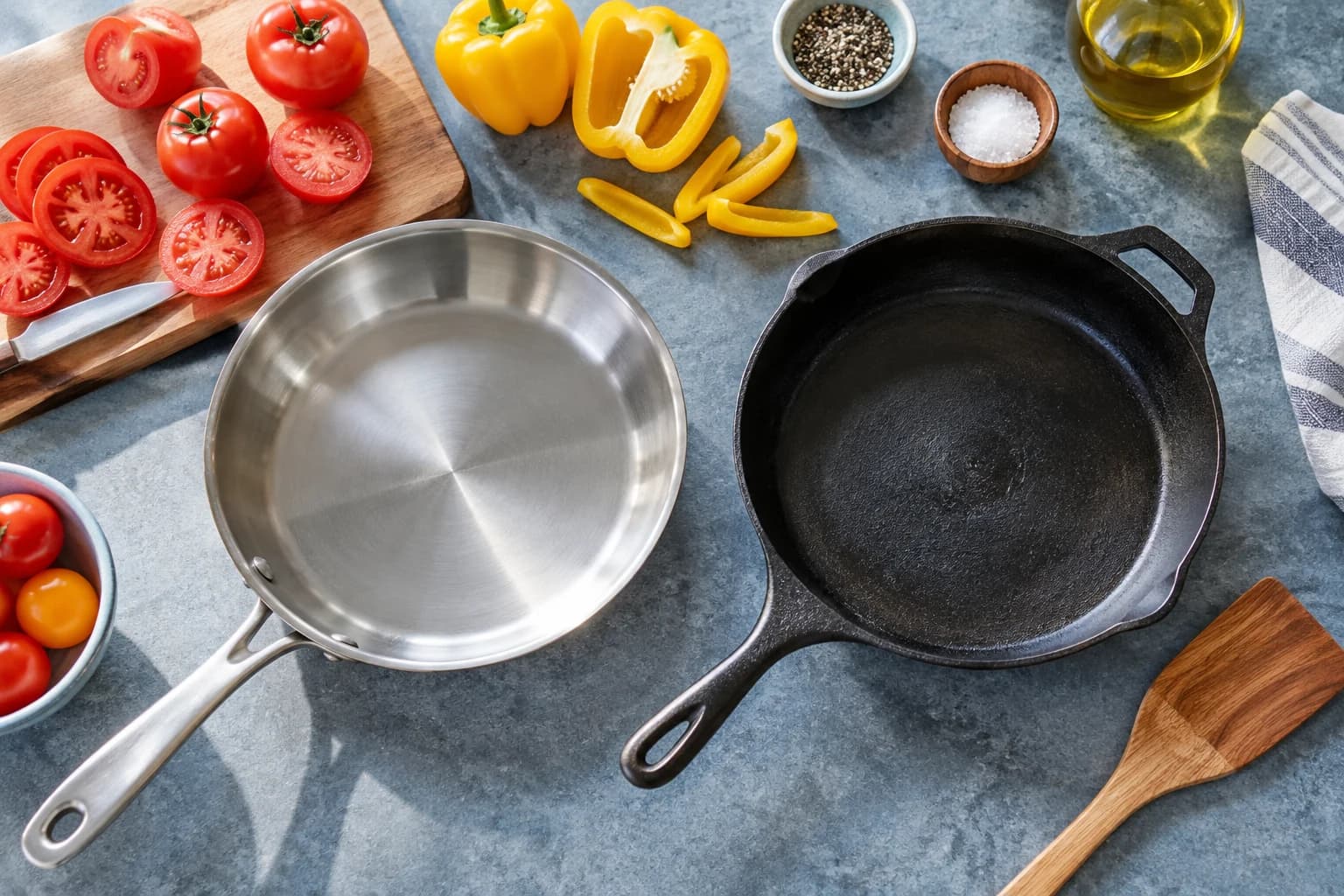
Cookware sets are easy to compare by piece count and hard to compare by usefulness. Lids may count as pieces, familiar shapes may appear in several sizes and a handsome finish can distract from whether the pans fit your stove and cupboard. Start with the meals you make most often and work back to the tools.
This is a purchase-planning guide, not a tested ranking or a cooking-safety manual. We compare documented compatibility, ownership and care requirements. Material names alone do not establish even heating, lifespan or ease of use for a particular pan; those claims need model-specific evidence.
01
Choose the pieces around your cooking
List three ordinary meals you make repeatedly. Note which pans you use, which feel awkward and which sizes are missing. That exercise produces a useful brief: perhaps one larger skillet, a pot with the right lid or a replacement for a pan you no longer enjoy using.
If you are building a kitchen from the beginning, count distinct jobs rather than matching pieces. Compare usable cooking area and storage dimensions, not only the rim diameter. Check handle length and cupboard fit. A set is convenient when the pieces earn their place; an extra shape is not automatically extra value.
02
Compatibility is specific, not decorative
Read the manufacturer's compatibility list for your stove and the exact piece you are buying. Confirm any restrictions on the cooktop, pan base, handles, lids and oven use in the actual instructions. Do not infer compatibility from the color, apparent weight or a photograph of a similar pan on a different cooker.
For an induction setup, check the maker's explicit information for the selected model. For other cooktops, read both appliance and cookware instructions where relevant. Our shopping approach is to put compatibility beside the model name before comparing finish or price; a beautiful pan that does not meet your setup is not a useful shortlist candidate.
03
Read the care routine for each material
Lodge explains seasoned cast iron and its maintenance on its care page. That documentation illustrates why care belongs in the buying decision, not why every buyer should choose cast iron. Other finishes and materials have their own instructions; compare those for the exact products rather than copying one routine across a whole kitchen.
Ask whether the routine fits the way you actually clean up. Check permitted washing methods, utensils and storage instructions in the maker's documentation. We do not recommend an improvised temperature, seasoning method or chemical cleaner here. A general buying guide should direct you to the correct instructions, not replace them.
Source: How to season, Lodge Cast Iron
04
Compare individual usefulness with set value
Lay out the proposed set as a list: each pan, each lid and each accessory. Mark the pieces you expect to use. Then compare that package with individual pieces covering the same jobs. Remember that the apparent saving is meaningful only if the contents suit your kitchen and routine.
Inspect the weight and dimensions where they are documented, the handling you can assess in person and the return conditions. Our buying judgment is to start with a few well-understood pieces and add around real cooking needs. That is a focused purchasing strategy, not a claim that one material is universally better than another.
THE SHORTLIST STARTS HERE
Three directions to compare
Start with the approach that fits your needs, then compare the details that matter to you.
Everyday pan-first
Choose one documented compatible pan around a frequent meal and needed size.
The trade-off: A single piece may not cover larger batch-cooking jobs.
Care-conscious cast iron
Consider the maker's instructions and whether you want that maintenance routine.
The trade-off: Material reputation does not replace checking weight and handling.
Coordinated starter set
A set whose actual pieces cover distinct jobs and fit your storage.
The trade-off: Count useful cookware, not lids and accessories as equivalent value.
SAVE YOURSELF THE SURPRISE
Before checkout
- Repeated meals mapped to pan sizes.
- Stove compatibility confirmed.
- Handles, lids and storage fit checked.
- Care instructions read per piece.
- Set contents compared with individual pieces.
- Exact model and return conditions recorded.
MAKE IT PERSONAL
Bring your brief to the concierge.
Start with this, then add the details that matter to you:
“Help me choose cookware for my stove and the meals I make.”
Find my options ↗Sources
- How to season
Lodge Cast Iron · manufacturer · Accessed October 3, 2026
Manufacturer care requirements for seasoned cast iron, not comparative performance testing.
ANOTHER GOOD QUESTION